Research experience supporting delivery innovation.
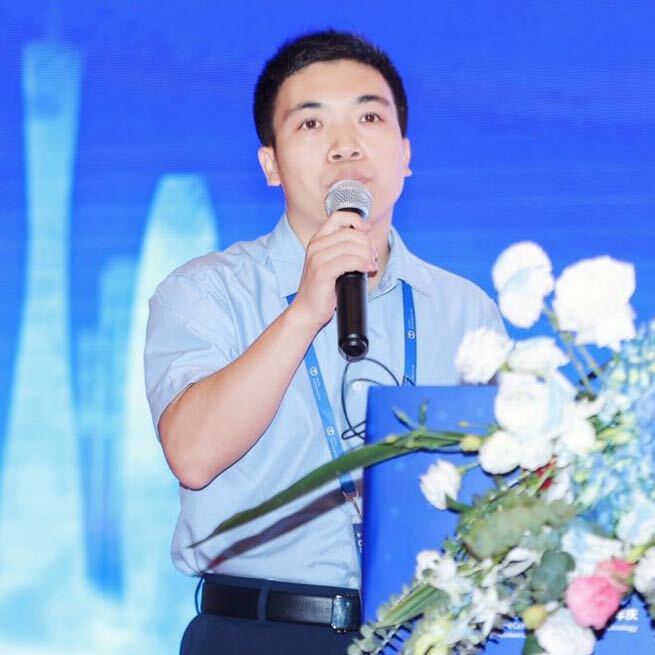
Professor Xiangzhao Ai’s group works in biomimetic nanomedicine, glycocalyx engineering and imaging, providing scientific direction for delivery design.
School of Life Sciences and Biotechnology, Shanghai Jiao Tong University Department of Bioengineering Tenure-track Associate Professor · PhD supervisor
Cell-membrane engineering and nanomedicine inform delivery design.
Main research interests: targeted drug delivery and novel cancer vaccines.
Combining biomimetic membrane carriers, glycan surface modification and nano-imaging to explore organ targeting and antigen delivery, with model studies to evaluate carrier and vaccine designs.
2006–2010
Dalian University of Technology BSc · Applied Chemistry
2010–2013
Jilin University MSc · Analytical Chemistry
2013–2018
Nanyang Technological University, Singapore PhD · Chemistry and Biological Chemistry
2017–2019
Nanyang Technological University, Singapore Research Fellow / Research Scientist
2019–2021
University of California San Diego Postdoctoral research · Nanoengineering
2021–present
Shanghai Jiao Tong University School of Life Sciences and Biotechnology · Department of Bioengineering
Academic details checked against the official SJTU profile on 14 October 2026. The technical advisor supports scientific direction and study review; the company coordinates projects and client deliverables.
A CONNECTED TOOLBOX
From interface engineering to in vivo tracking, a connected scientific toolkit.
Scientific strengths translate into practical study steps: building carriers and interpreting their biological behavior.
Original illustration labels: Chinese. Conceptual cancer vaccine research: antigen delivery, cellular presentation and immune response. Not a validated product.
01
Biomimetic membrane engineering
Combine natural membrane interfaces with payload systems to explore membrane selection, coating and functionalization. Evaluate preparation consistency, payload retention and cellular interactions for each project.
02
Glycan and surface modification
Glycocalyx and ligand engineering modify interactions with biological targets. Binding, uptake and competition controls test function beyond structural characterization.
03
Imaging and tracking
Connect fluorescence, photoacoustic imaging and distribution research to design interpretable tracking studies. Signals must be assessed alongside quantification, localization and payload state.
04
Novel cancer vaccines
Nanovaccine research around antigen delivery and immunotherapy, including relationships between targeting carriers and antigen presentation.
Projects and honors are drawn from the official SJTU profile and form part of the technical advisor’s academic record.
Research projects
2023–2025
NSFC Young Scientists FundPrincipal investigator
2023–2026
NSFC General ProgramPrincipal investigator
2025–2026
SJTU Biology Dual-Mentor Interdisciplinary Development ProgramParticipant
Academic recognition
2016
Reaxys PhD Prize
2017
Chinese Government Award for Outstanding Self-Financed Students Abroad
2022
Shanghai Overseas High-Level Talent Program
2024
Second MEGA Engineering Award · Science Project Award
2025
Challenge Cup National Special Prize · Co-supervisor
The official SJTU page lists Xiangzhao Ai and Xinqing Zhao as supervisors of the Challenge Cup project. Recognition is presented in that capacity.
SELECTED RESEARCH
Published research. Traceable scientific foundations.
Theranostics
Erythrocyte-inspired delivery
Erythrocyte-coupled biomimetic nanomedicine in non-small cell lung cancer research
Red blood cell-conjugated biomimetic nanomedicine for enhanced therapy of non-small cell lung cancer
A delivery system combining erythrocyte-membrane nanoparticles with erythrocytes to study circulation, distribution and efficacy in models.
J. Am. Chem. Soc.
Glycocalyx engineering
Glycan-modified cellular nanosponges in secretory diarrhea research
Glycan-Modified Cellular Nanosponges for Enhanced Treatment of Cholera Toxin-Induced Secretory Diarrhea
Surface glycan engineering with biomimetic delivery illustrates how carrier interfaces can be designed around biological targets.
Science Advances
Responsive imaging
Erythrocyte-carried fluorescent probes for ovarian tumor identification
Red blood cell–hitchhiking fluorescent probe to promote intraoperative diagnosis of human ovarian tumor
Combines erythrocyte transport, enzyme responsiveness and targeting to coordinate carrier design with imaging readouts.
ACS Nano
Biomimetic vesicles
Biomimetic nanovesicles combined with short-term fasting in tumor research
Biomimetic Nanovesicles Synergize with Short-Term Fasting for Enhanced Chemotherapy of Triple-Negative Breast Cancer
Illustrates joint design of biomimetic vesicles and disease environments, emphasizing carrier–biological environment interactions.
Biomaterials
Surface functionalization
Glycan-modified cellular nanosponges for botulinum toxin neutralization
Glycan-Modified Cellular Nanosponges for Enhanced Neutralization of Botulinum Toxin
Demonstrates continuing research in membrane functionalization and binding selectivity.
Advanced Healthcare Materials
Nanovaccines · Review
Review of spleen-targeting nanovaccines for immunotherapy
Recent Advances of Emerging Spleen-Targeting Nanovaccines for Immunotherapy
Reviews design, immune mechanisms and translational considerations for spleen-targeting nanovaccines. This publication is a review.
J. Am. Chem. Soc.
Glycan engineering
Antiviral research using surface glycan-modified cellular nanosponges
Surface Glycan Modification of Cellular Nanosponges to Promote SARS-CoV-2 Inhibition
Illustrates glycan modification as an interface design variable, with function evaluated through biological experiments.
Nature Communications
Nanoimaging
Upconversion nanoprobes and multispectral photoacoustic imaging
Multispectral Optoacoustic Imaging of Dynamic Redox Correlation and Pathophysiological Progression Utilizing Upconversion Nanoprobes
Demonstrates experience in nanoprobe design and imaging of dynamic biological processes.
These studies include intestinal, tumor, viral and toxin applications. They demonstrate scientific foundations, not direct evidence of efficacy in kidney indications. Unpublished data are not presented here.
COMPARABLE BY DESIGN
Compare delivery on the same terms.
Interpretable comparisons require matched payloads, dose definitions, models and time points.
1.0× denotes the planned normalization baseline, not a measured result. Compare groups with matched payloads, models, dose definitions and time points. Measure renal clearance independently of organ imaging. Report values, sample sizes and uncertainty when data are available.
FROM SCIENCE TO RENAL RESEARCH
Translating research experience into testable kidney research.
New target cells and disease conditions require fresh validation. Shengyu connects carrier engineering with kidney research questions to build evidence progressively.
Build validation plans around the research question
01
Define the target site
Refine “kidney accumulation” into target-cell localization, active payload exposure and research endpoints.
Define localization and endpoints
02
Establish appropriate controls
Separate carrier effects, free-payload effects and targeting contributions to avoid overinterpreting distribution or imaging results.
Build the evaluation plan
03
Accumulate evidence in stages
Progress from preparation and in vitro validation to in vivo distribution and disease-model studies, with defined criteria at each stage.
↺Review results against questions, controls and predefined criteria; revise the design when needed.